
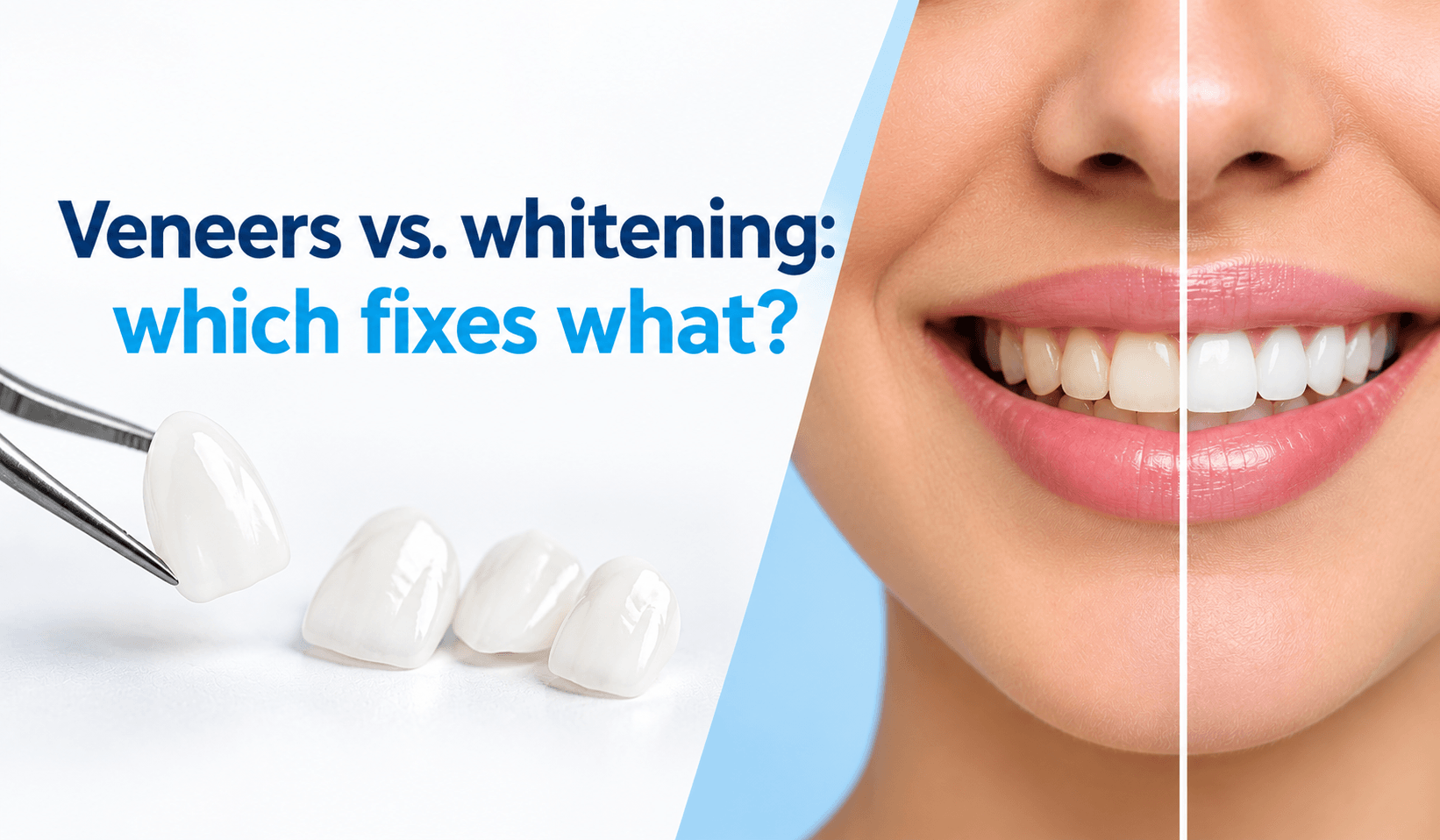
A brighter smile can improve confidence, but not every type of discoloration responds to the same treatment. When deciding between cosmetic options, understanding the difference between veneers vs teeth whitening is important because these treatments solve very different problems. Whitening is designed primarily to lighten natural tooth color, while veneers can change the appearance of individual teeth, including their color, shape, and proportions. Knowing what is causing the concern is the first step toward choosing an appropriate approach.
What Veneers Actually Change
Veneers are thin coverings placed over the visible front surfaces of teeth. They are generally made from porcelain or composite material and can be used to address several cosmetic concerns at once.
Unlike a whitening procedure, veneers do not simply lighten the natural enamel. They can alter the visible appearance of teeth that are stained, misshapen, uneven, worn, or affected by certain discolorations that do not respond well to bleaching.
Veneers may be considered when someone wants a more comprehensive cosmetic change. However, they require careful planning, and treatment may involve removing a small amount of enamel depending on the type of veneer and the individual case.
When Whitening Is the Better Choice
Teeth whitening is primarily intended for natural teeth that have become darker or stained over time. Common causes include aging, coffee, tea, tobacco exposure, and certain foods and beverages.
Whitening can be particularly suitable when the teeth are generally healthy, properly shaped, and aligned, but the overall shade is the main concern. It does not reshape teeth or close spaces, so expectations should match what the treatment is designed to accomplish.
The results can also vary depending on the type of discoloration. Surface stains may respond differently from deeper internal discoloration caused by trauma, certain medications, or changes within the tooth.
| Concern | Whitening | Veneers |
| General yellowing | Often suitable | Can address it |
| Surface staining | Often suitable | Can cover it |
| Tooth shape | Does not change shape | Can change appearance |
| Small cosmetic irregularities | Limited effect | Can address appearance |
| Internal discoloration | May have limited results | May cover certain discoloration |
| Multiple cosmetic concerns | Limited | Can address several at once |
Matching Treatment to the Problem
The biggest mistake is choosing a cosmetic treatment based only on the desired shade. A dental examination can determine whether discoloration is caused by surface staining, natural aging, enamel changes, decay, trauma, or another issue.
For example, whitening will not repair a chipped tooth or correct an uneven edge. Similarly, placing veneers solely to achieve a lighter shade may be more treatment than necessary when healthy natural teeth could respond well to a conservative whitening approach.
A qualified best dentist in dublin ca can evaluate the teeth, gums, existing dental work, and overall oral health before discussing cosmetic options. This assessment is especially important because crowns, fillings, and some other restorations do not necessarily change color in response to whitening.
Comparing Results, Maintenance, and Commitment
Both options can improve the appearance of a smile, but they involve different levels of treatment and maintenance.
Whitening is generally the more conservative option because it works on natural tooth structure without covering the teeth. However, the effect is not permanent, and dietary habits and natural aging can gradually affect the shade again.
Veneers can provide a more substantial visual transformation, but they require greater planning and care. They may also eventually need replacement. Good oral hygiene, avoiding habits such as biting hard objects, and following professional recommendations can help protect them.
Before choosing either option, consider:
- Whether the concern is primarily color or also tooth shape
- Whether existing restorations are visible when smiling
- The condition of the enamel and gums
- How much change is actually desired
- The long-term maintenance involved
FAQs
Can whitening replace veneers?
Not always. Whitening can lighten natural teeth but cannot change their shape, size, or position. Veneers may be more appropriate when several cosmetic concerns exist.
Can veneers be whitened later?
No. Whitening products generally affect natural tooth structure, not the material used for veneers. This is why the planned shade should be discussed carefully before placement.
Are veneers better than whitening?
Neither is universally better. The appropriate choice depends on whether the primary concern is discoloration or a combination of cosmetic issues.
Why did whitening not remove my stains?
Some discoloration occurs within the tooth rather than on its surface. Certain types of internal staining may respond poorly to conventional bleaching.
Should I whiten before getting veneers?
A dentist may recommend establishing the desired shade before veneers are made. This can help ensure the restorations are designed to complement the final appearance of the natural teeth.
Conclusion
The choice between whitening and veneers ultimately depends on what you want to change and why the teeth look the way they do. Whitening can be a conservative option for suitable natural teeth with unwanted discoloration, while veneers can address color alongside shape and other visible imperfections. A dental evaluation can help determine which approach makes sense for your smile and whether any underlying concerns should be treated first. If a dental problem requires urgent attention, searching for dentists near me emergency can help you find appropriate care rather than delaying treatment for a cosmetic procedure.


