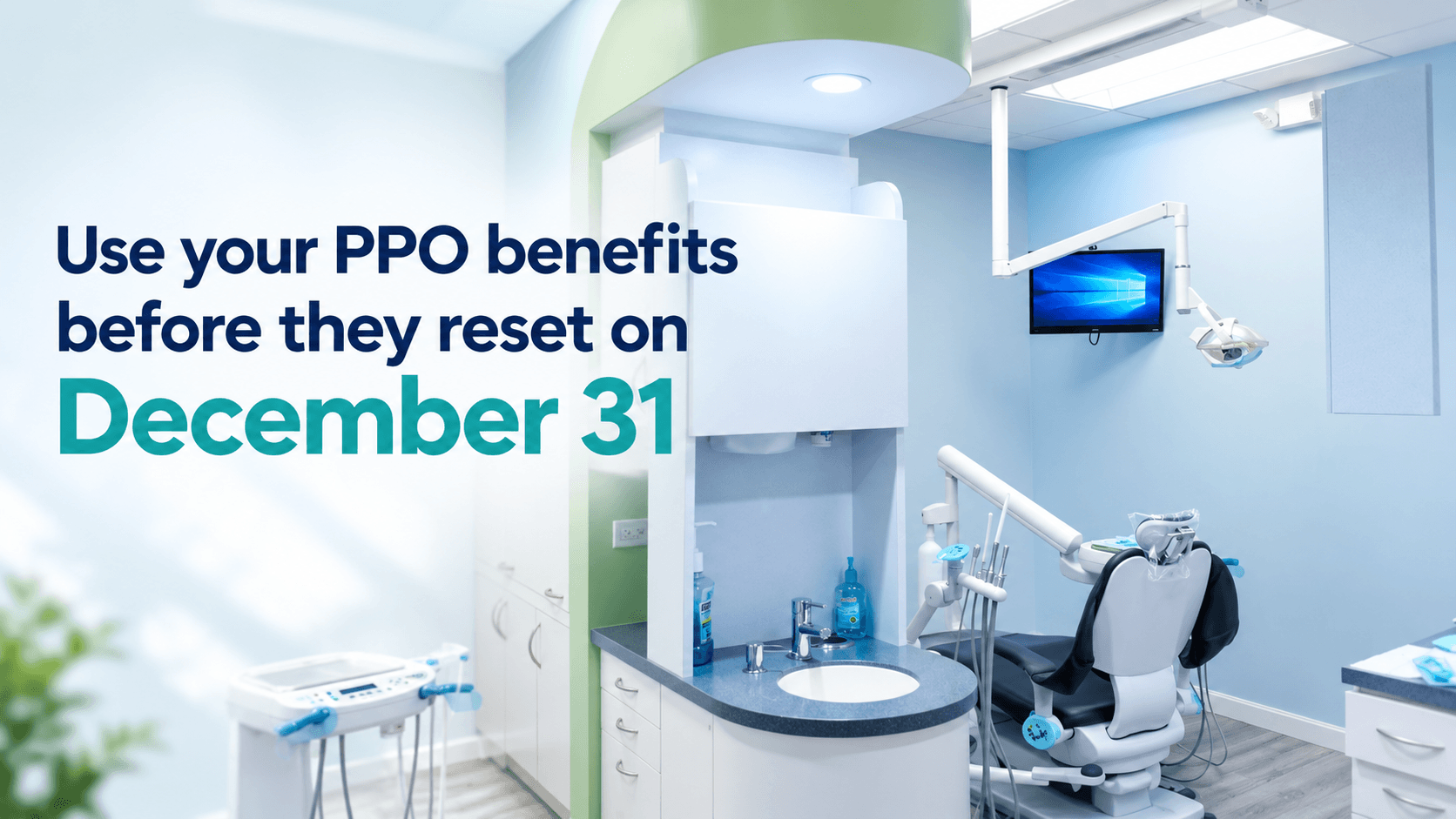
For many dental insurance plans, December 31 can mark an important deadline. If you have unused annual benefits, waiting until the new year may mean losing the opportunity to use them, depending on your plan. Understanding your ppo dental plan benefits can help you identify covered services, remaining allowances, deductibles, and treatment that may be worth scheduling before the year ends. Rather than rushing into unnecessary procedures, reviewing your plan and current dental needs can help you make informed decisions before benefits reset.
Why Year-End Dental Planning Matters
Dental insurance is typically designed around an annual benefit period. Unlike a savings account, unused coverage may not automatically carry forward into the next year. The specific rules vary by insurer and plan, so it is important to check your benefits rather than assume they will roll over.
A year-end review can be especially useful if you have postponed recommended treatment, have already met part or all of your deductible, or have routine preventive appointments still due.
Common services worth discussing with your dental office include:
- Routine examinations and cleanings
- Necessary X-rays
- Treatment for cavities
- Periodontal care
- Restorative procedures already recommended
- Replacement or repair of certain dental restorations
The goal is not to spend benefits simply because they are available. Instead, the deadline provides an opportunity to address legitimate dental needs while your current coverage is still active.
Making the Most of PPO Dental Benefits
Understanding how ppo dental benefits work can help you plan treatment more strategically. Your plan may have an annual maximum, deductible, coinsurance requirements, waiting periods, and different coverage levels for preventive, basic, and major services.
For example, if you have already paid your annual deductible, completing medically necessary treatment before the benefit period ends may be financially different from postponing it until January, when the deductible could apply again.
Before scheduling care, ask your insurer or dental office about:
| Item to check | Why it matters |
| Annual maximum | Shows the maximum amount the plan may pay during the benefit period |
| Deductible | Determines what you may need to pay before certain coverage begins |
| Remaining benefits | Helps identify available coverage before the deadline |
| Coverage percentage | Indicates your expected share of eligible treatment costs |
| Benefit renewal date | Confirms when the current benefit period ends |
| Preauthorization requirements | Helps prevent unexpected coverage issues |
Coverage details can differ significantly between plans, so reviewing your individual policy is essential.
What to Prioritize Before the Deadline
Not every dental procedure needs to happen before December 31. Preventive appointments and already-recommended treatment are often the most logical starting points, particularly when delaying care could allow a manageable issue to become more complicated.
If your dentist has identified a cavity, cracked restoration, gum problem, or another condition requiring treatment, ask whether it should be addressed before the benefit period ends. You can also discuss whether treatment can reasonably be divided across benefit periods when multiple procedures are needed.
Scheduling early is important because dental offices can become particularly busy toward the end of the year. Leaving everything until the final week may make it harder to find a suitable appointment.
When Emergency Needs Cannot Wait
Year-end planning should never encourage someone to postpone urgent dental care. Severe tooth pain, facial swelling, uncontrolled bleeding, a knocked-out permanent tooth, or significant dental trauma may require prompt evaluation.
If an urgent problem develops, an emergency dentist livermore may be appropriate depending on your location and availability. Insurance considerations can be discussed afterward, but immediate dental concerns should not be ignored simply because the calendar is approaching the end of the benefit year.
For nonurgent treatment, however, reviewing your remaining coverage early can give you more flexibility and reduce last-minute scheduling pressure.
A Simple Checklist for December
A quick review can help you determine whether action is needed before your benefits reset. Start by checking your insurance portal or contacting your insurer to confirm the current benefit period and remaining coverage.
Then consider:
- Have you completed your recommended preventive visits?
- Do you have untreated dental concerns?
- Have you already met your deductible?
- Do you have unused annual benefits?
- Does your plan require preauthorization for planned treatment?
- Can the dental office verify your expected coverage?
Keep in mind that an estimate of insurance coverage is not necessarily a guarantee of payment. Your insurer ultimately determines benefits according to the terms of your plan.
Conclusion
December 31 can be a useful reminder to review your dental health and insurance coverage, but it should not turn into a race to schedule unnecessary treatment. Check your remaining benefits, address recommended care, and contact your dental office early enough to understand your options. If you are changing practices or seeking care for the first time, a dentist for new patients can also help you understand your treatment needs and insurance considerations. A little planning before the deadline can help you enter the new year with fewer unresolved dental concerns and a clearer understanding of your coverage.
FAQs
Do dental insurance benefits always expire on December 31?
No. Many plans follow a calendar-year benefit period, but some use different renewal dates. Check your specific policy.
Can unused dental benefits roll over?
Some plans may offer limited rollover provisions, while others do not. Review your policy for the exact rules.
Should I schedule treatment just to use my benefits?
No. Treatment should be based on genuine dental needs. Available benefits can simply help you decide when appropriate care may be most practical.
Is preventive dental care usually covered?
Many plans provide some level of coverage for preventive services, but frequency limits, deductibles, and other restrictions can apply.
What happens if I wait until January?
Depending on your plan, your deductible and annual maximum may reset. This can affect your out-of-pocket costs, particularly if you need multiple procedures.